
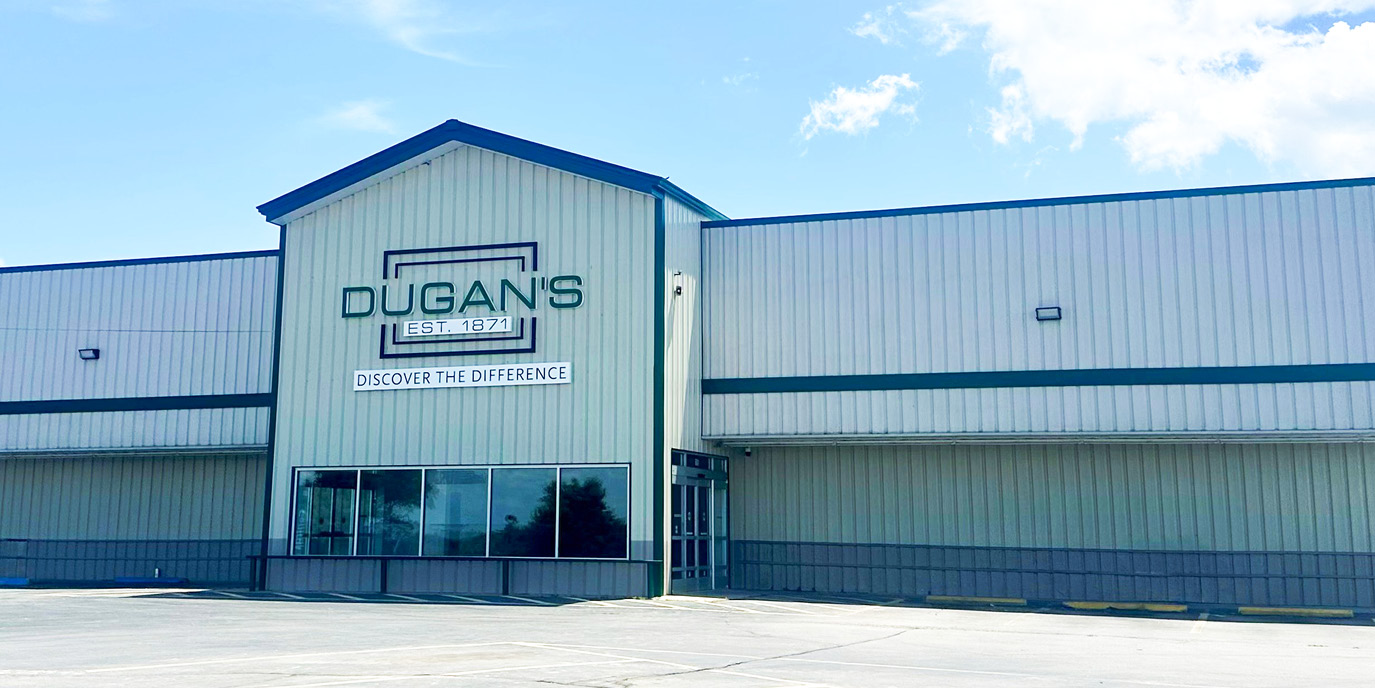
When Sean Paul purchased Dugan’s Paint and Flooring Center six years ago, just the fact that he was the seventh-generation owner was an accomplishment in itself. But the real headline is that, in successfully moving from one generation to the next, the business was able to succeed where many others have failed.
A study by the McKinsey Institute showed that in 2022 (just a year after Paul’s purchase of Dugan’s) 510,000 small businesses exited the market and 92% ended in a total closure, rather than a sale or transition.
These and other similarly startling statistics regarding the state of small business ownership could make it easy to despair about the future of independent retailing. But take a closer look at Dugan’s story, and you’ll realize a successful ownership transition isn’t impossible, it just takes some hard work.
Selling a small business is usually fraught with complicated conversations. You need more than an attorney to close the deal. Family businesses, in particular, must address emotional and operational issues that, if not dealt with properly, can doom the process from the start. Dugan’s provides a case study of how one business continues to thrive after navigating the challenges of a sale.
An Industry in Crisis
While the ownership change at Dugan’s was successful, it is unfortunately in the minority. A study by Project Equity shows that there are 2.9 million U.S. businesses owned by people 55 or older. Those businesses represent about $6.5 trillion in annual revenue, which includes $1.3 trillion paid in wages. The Exit Planning Institute’s State of Owner Readiness research indicates that only 20 to 30% of small businesses that go to market sell successfully. Up to 80% of businesses that go to market do not achieve a sale. Taking all those statistics together, the future of the independent retail industry is troubling.

A closed business is a lost job for the employees and lost investment in the community. Locally owned businesses generate revenue for the local economy by providing economic stability, supporting local nonprofits and offering a source for goods and services. According to the U.S. Small Business Administration, small businesses contribute nearly half of the nation’s entire gross domestic product.
In addition to what can be for some the daunting task of finding a successor, retiring owners in the home improvement industry face additional pressures from the market. Increased consolidation has pulled independent retailers into larger networks, raising the stakes for owners who haven’t planned for their own transition. Post-COVID shifts in real estate value have changed how businesses are valued. And there are fewer members of the next generation who want to enter the family business, leaving it vulnerable to consolidation.
A successful transition can take years, so retiring owners who don’t plan ahead can find themselves struggling to find a willing buyer and reap the benefits of their hard work. Common mistakes center on waiting too long to start a succession plan, failing to prepare future leaders and approaching the sale as a purely legal transaction. Those who are successful take a holistic approach to creating a business that is operationally and organizationally healthy long before signing a sell agreement.
Determining Fair Value Gets Complicated
When it’s time to sell, every retailer will ask: How much is my business worth? Prior to coming to Dugan’s, Paul spent several years as a CPA and knew how to answer that question. He had facilitated many business valuations and acquisitions.
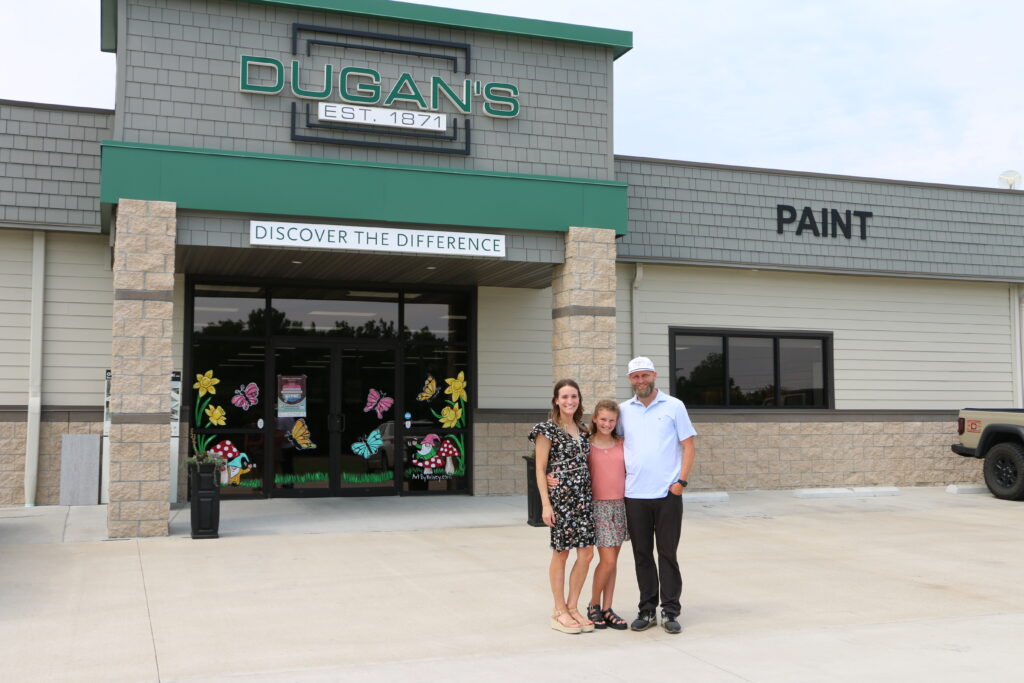
Yet in 2015 when he joined his wife, Tyger, working at Dugan’s, business valuation got a lot more complicated. Dugan’s, which has locations in Sedalia, Laurie and Osage Beach, Missouri, had been in his wife’s family since 1871—there was a rich family legacy to preserve. They knew that eventually his father-in-law would need to sell the business. Paul came up with what he thought was a fair value of the business and began breaching the subject of an eventual sale. His father-in-law, however, resisted the idea. He was willing to elevate Paul to a leadership role within the company, but was non-committal about a complete transfer of ownership.
"It took me a while to understand what was behind his hesitation, because I'd offered him a fair price and he still wasn't ready to move forward,” Paul says. “What I eventually realized was that he wanted to make sure the business would benefit both of his daughters equally, not just whichever one ended up running it. Their future well-being was 100% his biggest concern."
Once Paul understood the real motivation behind his father-in-law’s indecision, he was able to come up with a better proposal. In his new plan, instead of a lump sum, he created a payment structure that gave his father-in-law a fixed income and included a provision for the other daughter. What his father-in-law really wanted, Paul says, was someone to manage the cash flow.
“I think this is true for a lot of business owners,” he says. “They have worked hard and have made very good lives for themselves, but they’ve never had a huge chunk of money to show up at one time. It’s hard to manage, and I don’t think most people want that. The payment structure was more important to him than the total amount.”
Paul and his father-in-law finally came to an agreement on a sale, and it wasn’t an unbiased, market-based valuation, either. As is likely the case with many family-owned businesses, there was both a financial and emotional aspect to the sale.
“When you’re selling to a third party, the business is worth whatever someone is willing to give you,” he says. “When you’re selling to a family member, it’s worth whatever is deemed fair.
Coming up with a fair price was difficult because I had to get inside his mind and understand what he really wanted. How much money did he want to get out of the business to feel good about it? He wanted his daughters to be taken care of. And he wanted to feel good about turning over the reins to me, knowing I would honor his family legacy.”
Getting the Business Ready for the Sale
One common reason succession fails is that the business is not operationally ready for a new owner. As the incoming owner, Paul wanted to see growth potential in the business, so he started zeroing in on potential blocks to that growth. One of the most obvious was that his father-in-law managed many of the store processes and decision-making.
“He did an amazing job growing the business, really through hard work and dedication,” says Paul. “Like a lot of owners who’ve built something over decades, most decisions ran through him—so for him to walk away, we needed to build out a team who could carry that forward.”
In the two years prior to closing the sale, Paul began building a team to take the business forward. He began streamlining processes and procedures, which often involved some difficult decisions.
For example, at one of the company’s locations, the manager in charge was an outstanding salesman, but was struggling with managing day-to-day operations. Paul recast his role to be a sales manager, letting him focus on what he did best, and found someone else to be the store manager. As a result, the location ran more efficiently because the new manager was able to focus on operations rather than sales.
Similar changes throughout the company helped streamline responsibilities so that salespeople could focus on sales, while other staff were tasked with administrative tasks.
“I spent a lot of time just making sure we had the right people in the right positions and then giving them the ability to make decisions,” he says. “The changes have allowed us to grow, and that growth came through increased efficiency, which allowed us to scale and take on more jobs while adding customers.”
To further help in the transfer of responsibilities, Paul acquired a building across the street from the company’s main location in Sedalia. Then both he and his father-in-law moved their offices to that building, reducing the chance that customers could come directly to them when they had a question.
Instead, Paul began directing those questions to other staff, retraining customers to realize they didn’t have to consult the boss on every project. Then, over the next year and a half, both of them also made personal visits to customer accounts, introducing the appropriate salesperson as the new point of contact.
A more difficult task, admits Paul, was earning the trust of the staff. He had already worked his way through the company, learning every position, from the warehouse to sales to operations, so he understood how each department operated. He approached each job with an attitude that he was there to serve his team and make their jobs easier.
“Whenever I was helping an employee or whenever they brought a concern to me, I took care of it immediately,” he says. “I wanted to make sure they were never waiting on me for something; I’d rather be waiting on them. It took a lot of time, but helped to earn their trust. Everyone realizes this is a team environment. We’re here to help each other.”
He also changed the employees’ pay structure to pay them the highest wage the business could afford. That, of course, made everyone happy.
Closing the Deal
After working out a buying price, streamlining operations, communicating the change in ownership to customers and gaining the trust of his employees, Paul and his father-in-law were ready to sign the final papers. They started the legal process about nine months before the closing date. They had already worked out all of the hard questions, so all that was left was finalizing the legal paperwork with their attorneys.
This final stage of the transition was fast and easy. Paul and his wife took ownership on Jan. 1, 2021. Paul’s father-in-law, in return, agreed to make that his last day in the store, giving full control to the next generation.
“He asked if he could still stop in from time to time, and I told him I thought a clean break would give the transition the best chance to succeed,” says Paul. “We agreed that if people kept bringing questions to him, and he answered them a little differently than I would have, it could send mixed signals during an important stretch. It wasn’t personal—it was about setting the new structure up to work.”
Today, Paul and his father-in-law have a good relationship and the business is thriving. In the past six years, sales have doubled. He credits the successful transition to their willingness to have the hard conversations early, not ignoring the operational and emotional issues that could jeopardize the business later.
“Have the difficult conversations sooner than later and don’t be offended by what everyone else is feeling,” he says. “I think a lot of people are too afraid to say what they’re really thinking, but if you don’t say it, you won’t be able to deal with it.”
Today, Paul gives back to the paint industry as treasurer for the ALLPRO board of directors. From that vantage point, he can see succession planning as a crisis affecting the entire industry.
“There are many paint retailers in the same situation I was in, where the parent needs to move on and the kids are trying to grow the business, but there’s a lot that the outgoing generation just doesn't want to talk about,” Paul says. “The hardest part of the succession process for us was having those difficult conversations. But it’s far better to have those conversations ahead of time rather than later. Once those were done, we had a smooth transition.”