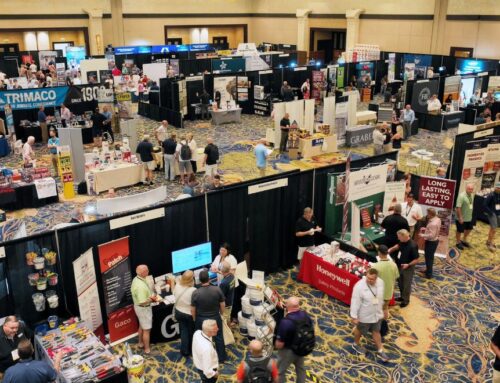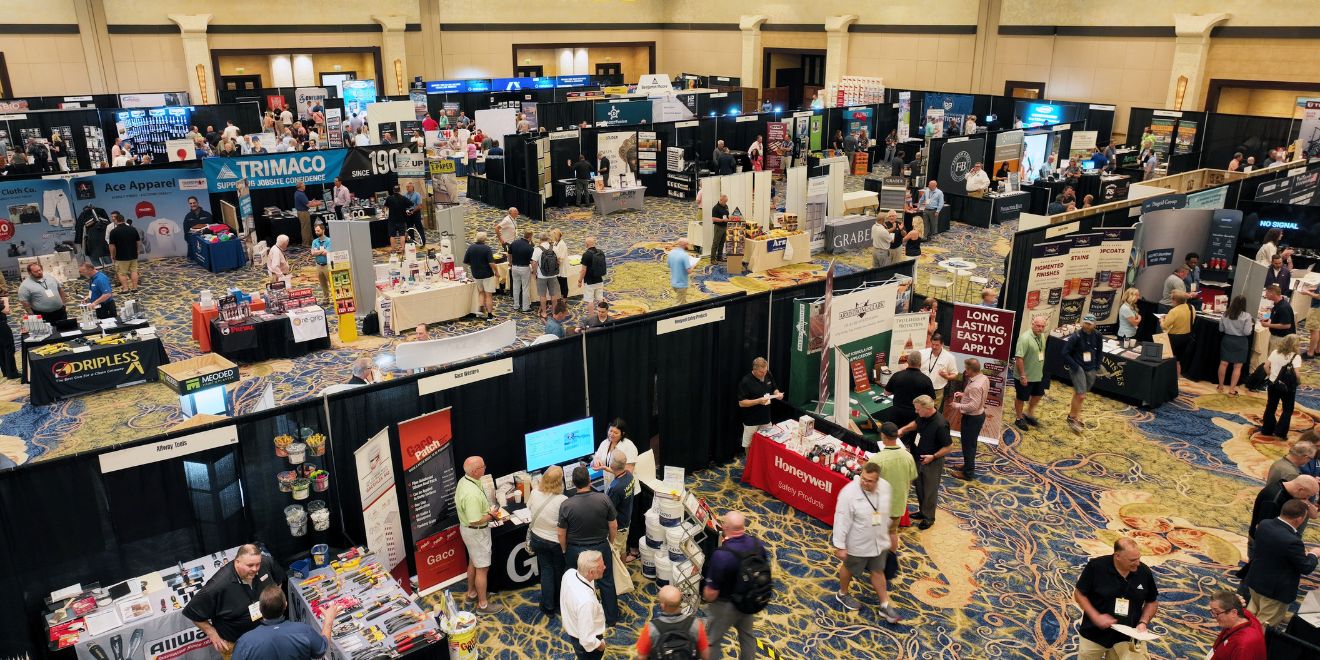


Bringing the entire independent home improvement channel together for two days of education, networking and fun under the Florida sun at the JW Marriott Grande Lakes in Orlando, the 2026 Independent Home Improvement Conference sent attendees home with practical takeaways and immediate best practices. As part of the general sessions, attendees heard from economic and industry experts and took a closer look at the state of the industry and where the channel is heading.
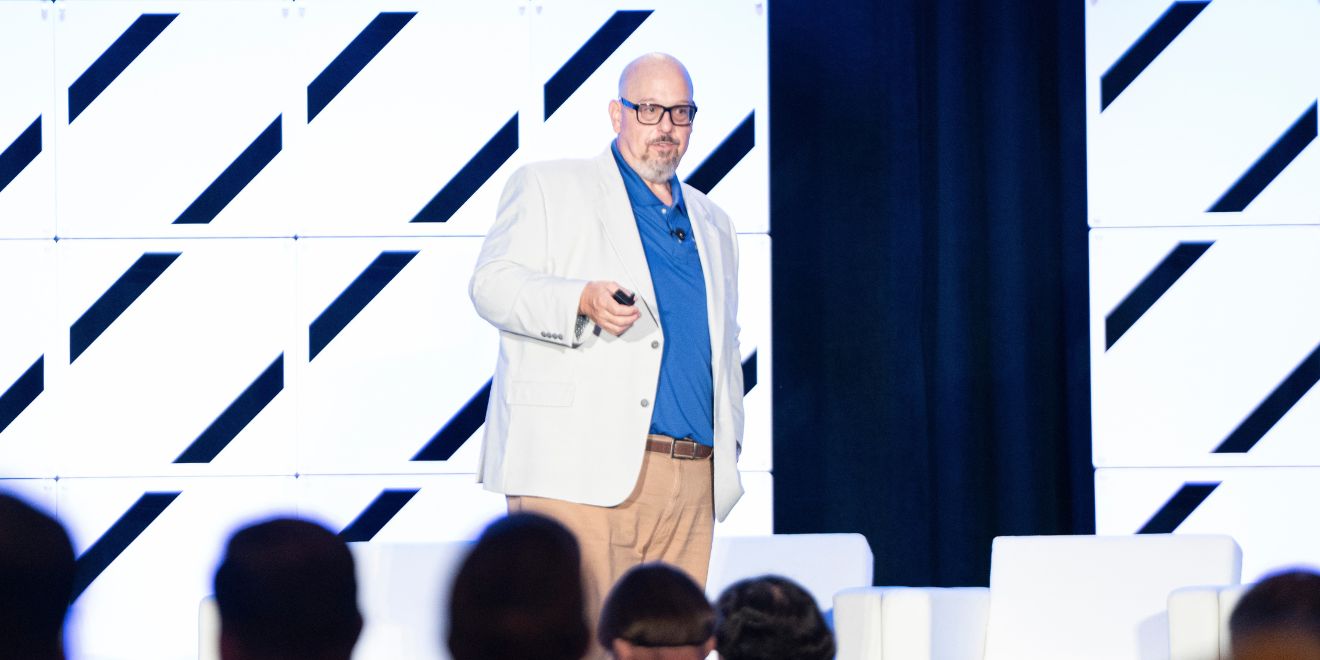
Dan Tratensek, COO for the North American Hardware and Paint Association (NHPA) provided a midyear analysis of the state of the industry and best practices for finishing the rest of 2026 strong. Dave King, Home Improvement Research Institute (HIRI) executive director, unpacked macroeconomics’ impact on the independent channel.
During his “State of the Industry” presentation on the main stage, Tratensek shared that the home improvement retailing industry is undergoing fundamental shifts, driven by major macro-market, societal and consumer behavior shifts over the last decade.
“We are currently ‘somewhere in the middle’ of this evolution and broad paradigm shift, leading to industry uncertainty,” Tratensek says. “Regardless of the drivers, the effects are being felt across all sectors of home improvement retail.”
Tratensek explained that the industry is going through more than a temporary downturn, but a fundamental transformation with economic and behavioral shifts reshaping competition and the independents’ traditional advantages becoming less sustainable.
“This is not a down market. This is a different market,” Tratensek says. “We are experiencing slower growth, higher complexity and increased competition.”
Since the end of COVID-19, the market has seen a compound annual growth rate (CAGR) of 1.6%, compared to average growth in the 3% range. Large retailers and independents are generating growth primarily through higher spending per customer rather than increased traffic and market share gains, operational execution and customer retention, which remain more important than broad market expansion, Tratensek says.
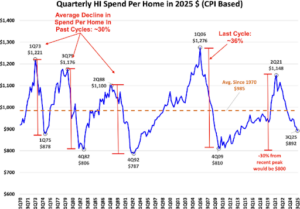 Real home improvement spend per home peaked at $1,148 the second quarter of 2021, the highest level since 1973, King says. Real spend is now $892; that gap is why a positive forecast still feels flat across operations.
“During the pandemic this industry was standing on a moving walkway, but that walkway has stopped. The dollar display is still moving because prices are higher, but you now have to create your own forward motion,” King says. “Growth is no longer something the market gives you. It’s something you earn by moving a project and taking share.”
Looking specifically at the independent channel, independent retailers entered 2026 with renewed momentum and improved profitability, with sales growth driven by larger transaction sizes rather than increased customer traffic, Tratensek says.
 Margin recovery and disciplined inventory management are improving financial performance and retailers remain optimistic about growth opportunities despite continued cost pressures. Customer traffic remains the industry’s most significant challenge, larger basket sizes continue to offset softer transaction counts and labor productivity has improved across most retail segments.
“Inventory management remains one of the most critical operational disciplines as rising operating expenses continue to pressure profitability,” Tratensek says. “Winning retailers will focus on operational excellence, inventory productivity, labor efficiency and customer retention.”
Looking to the future, the industry will see a continued shift to rural and suburban lifestyles, the aging in place segment will become more prevalent, and there will be a change in focus from DIY to do it for me (DIFM).
“The industry appears to be moving toward a period of normalized, low-single-digit growth with growth opportunities strongest in pro customers, services, rural markets and emerging DIY segments,” Tratensek says. “Technology, workforce development and customer experience will become increasingly important differentiators, and future growth will come less from favorable market conditions and more from strategic execution and differentiation.”
While demand for home improvement products has fallen, the need has not. Every peak-to-trough decline in real spend per home since 1970 has ended between $787 and $878, and every one was followed by a recovery, King says.
“That is not a forecast, it is 55 years of history, and it is the strongest thing anyone can tell you about the long-term health of this industry,” he says.
 King sees the demand that remains moving toward need-driven categories that overlap with independent strengths and suggests three moves to recalibrate, not retreat: Convert the not-yet project, own the urgent pro trip and own repair through completion.
First, retailers need to help the customer move to action by giving them a credible reason to begin—promote essential repairs, offer good-better-best options and guide them on a phased plan where they do the urgent portions now and save the rest for later.
Second, earn pro business by concentrating high-touch service where potential, fit and job-flow value are strongest. And, finally, own customer repairs through completion by building the complete list, confirming compatibility and alternatives, staging the order to the job and recovering fast when reality changes.
“Be fair: this is a confidence recession, not a demand collapse. Your biggest competitor is ‘not yet’ and every trough since 1970 has been followed by a recovery,” King says. “And be honest about this too: execution, not the market, is the variable. So don’t retreat. Recalibrate and move one more complete project from waiting to working, every week.”