

Successful retailers rarely sit on the laurels of past achievements; they are always asking the question, “What can we do better?” Without continual maintenance and improvement, a business can quickly lose relevance with customers or find itself falling behind a stronger competitor. That’s why every category in your store—even your top performers—needs refreshing from time to time. If you wait until you see signs of decline to take action, chances are you’re already losing sales.
Paint & Decorating Retailer spoke with three retailers who have each made significant gains in category sales by tweaking some of their operational strategies in certain areas to increase overall sales.
While these retailers were already running a strong business, they all found ways to take what they were doing and make it even better.
Whether you need to revive lagging sales or want to take a category to the next level, here are four operational areas where you can create growth.
Give Customers Different Price Point Options
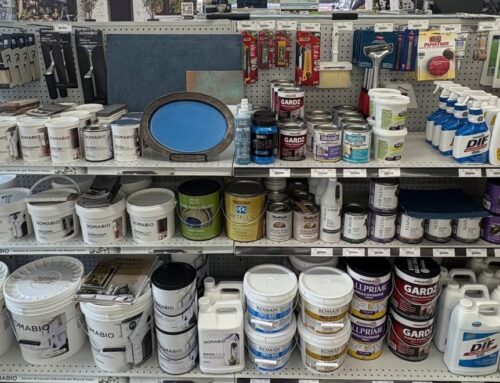
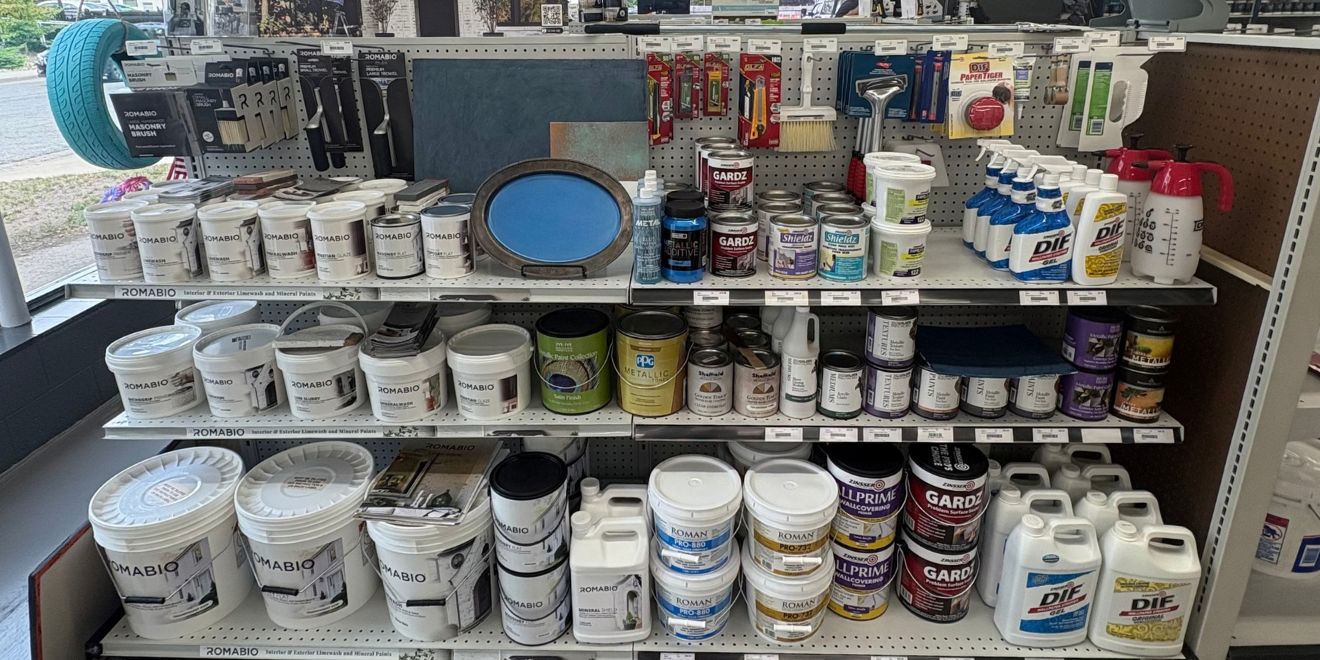
 Not long after it changed ownership, Pintura Paint Store in San Antonio, brought in a new line of a national brand of paint. The new owners, Danny Garcia and JD McDowell, implemented a fresh pricing strategy with the new line, giving the store the ability to offer paints at good, better and best price points.
Garcia says he and his partner were hesitant at first to carry Benjamin Moore because they thought customers might think it was too expensive.
“We thought that when customers saw the Benjamin Moore name, they would think high-end but also not affordable,” Garcia says. “Now we see that our partnership with them allows us to offer customers something for every budget and need, from inexpensive to mid-range to high-end.”
The new line also gave the store more options to sell to both contractor clients and DIY customers.
“We now have a very affordable contractor line for our professional customers and different tiers of paint, including a basic, easy-to-use version for our DIYers,” Gracia says.
Perspectives in Lexington, Kentucky, also recently enhanced its paint selection, replacing one brand of ceramic paint with another. The store was carrying a ceramic paint that owner Jason Taylor says wasn’t selling well, so he decided to bring in a private-label ceramic paint that would hopefully appeal more to customers looking for that type of product.
Like the former paint line, the new paint is a premium product and also bears the Perspectives name on the label, giving the store its first private-label paint line that it can sell at a competitive price.
“We’re getting the Perspectives ceramic paint at a really good price, so we’re going to be able to offer it to customers at a price point that competes well with our other lines,” Taylor says.
“Customers looking for a ceramic paint will still get a premium product but at a better price.”
Taylor has implemented creative pricing strategies for the store’s wallpaper products too, offering 25 percent off book price on any special order wallcoverings. Customers will also find 50 percent off a rotating selection of books and discounts on in-stock patterns.
Utilize Traditional and Digital Marketing to Get the Word Out
 When Danny Garcia and JD McDowell took ownership of Pintura Paint Store in San Antonio nearly two years ago, they saw nothing but opportunities for growth in the paint category. The previous owners sold a good selection of paint, but Garcia and McDowell felt the store could expand its paint offerings and reach even more customers, taking the store’s paint selection from fine to phenomenal.
San Antonio has only a handful of retailers that sell a national paint brand, and Garcia saw the partnership with this paint company as the perfect opportunity to get in at the ground level and grow, carrying a brand with name recognition and status.
For Garcia, focusing on marketing was the first step to boosting their paint department. Once the store was stocked with the new paint products, Garcia shared with customers through the store’s Facebook page, which he created for the store soon after taking ownership. He began posting regularly, including videos of the new products and renovated space and promoting special events like the grand reopening and summer open house.
“Establishing a digital presence was the biggest challenge when we took over,” Garcia says. “The previous owners didn’t have a good foothold on any sort of online presence, so I took that on.”
Especially during the pandemic, when digital was one of the only ways to connect, Garcia met customers where they were—online. And he continues to post about the new paint line to keep the products and store in front of mind for customers.
The posts also introduce customers to the new owners. Since Garcia and McDowell took over as owners, they have made an effort to engage with all their customers and establish themselves as a helpful resource.
“All the posts I’ve done show our customers that we’re real people and a family-owned, locally operated business, which sets us apart from our competitors,” Garcia says. “We want to be available, be ourselves and be a local force in the community.”
Refresh Your Assortment With Up-to-Date Options
 The wallcoverings department at Perspectives in Lexington, Kentucky, was performing well, bringing in both DIY and commercial customers. But this category can be a tricky one, with ever-changing trends and ebbing and flowing popularity, which is why owner Jason Taylor wanted to take it to the next level by diversifying and adding up-to-date products to what the store already offered.
The changes have come over time to accommodate changing customer needs. Since 2004, when Taylor took over as owner, he has expanded the design center to include window coverings and shutters.
He also added a line of upholstery, housed in a 30-foot by 50-foot section of the salesfloor. Customers can browse thousands of interior and exterior fabrics for their upholstery projects and receive design advice from the in-store designers.
On the wallpaper side, Taylor has broadened the store’s in-stock displays to carry new designs and new types of wallpapers, ensuring his inventory reflects modern trends.
“The new wallpapers we are getting in aren’t just retreads of old products; they’re new patterns and new substrates,” Taylor says. “We’re selling wallpapers with different features, such as pasting to the wall instead of the paper and others that are guaranteed to come down in one strip.”
The store continues to get in new wallpaper books and still sells classic and traditional styles. Customers can choose from over 2,000 rolls in stock and more than 1,100 wallpaper books.
Along with adding new product offerings, Taylor and his team refreshed the design center, showing customers that they sell more than just wallpaper. They put down new wood flooring in the space and added displays that showcase all the different window treatments the store sells. Customers can shop the assortment of products and see design ideas in person.
The design center reboot has positioned Perspectives as more than just a paint store; it’s become a one-stop shop for all design needs, including paint, sundries, wallcoverings, window treatments and upholstery fabrics.
Train Customers to Look for Something New
 “Merchandising is something we do continually,” Ryan Buck, owner of Buck’s Home Building Centre in Bridgewater, Nova Scotia, says. “Just because a department isn’t failing doesn’t mean you should ignore it. You should never get to a point where a department looks outdated.”
Buck organized several employees into a merchandising team, tasking them to evaluate each department and create a consistent look and feel for the entire store.
Buck brings the team alongside him every quarter as they analyze a different department to see what could change to bring more sales to the area.
Depending on the nature of the changes needed, they may utilize updated planograms from their wholesaler, challenge vendors to come up with a better merchandising strategy or look for simple changes that can make a big difference. Most of the departments he’s tackling are already doing well; he’s just looking for ways to make them better.
For example, in the flooring aisle, the team began displaying flooring samples next to the boxed product, instead of only showing sample boards on the salesfloor. They also advertised special-order capabilities. Almost immediately, sales in the department increased 6 percent. In another example, power tool sales climbed 39 percent last year after Buck challenged his key vendors to improve their merchandise presentation. They helped him eliminate outdated inventory and gave him new fixtures.
The merchandising team is also in charge of rotating endcaps every two weeks. As one of the most prominent display features in the store, endcaps are best positioned to keep customers interested in coming back.
“If your customers are always seeing a different endcap, they are always going to be wondering what you have that’s new,” he says. “You train people’s minds to think, ‘I want to see what’s going on in there.’ You need to keep categories from getting stale.”