

Wallpaper is making a comeback, with many DIYers and professionals opting for wallpaper instead of paint during renovations. According to Fortune Business Insights, the global wallpaper market size was valued at $2.01 billion in 2025 and is projected to grow from $2.11 billion in 2026 to $3.01 billion by 2034.
At Perspectives Inc. in Lexington, Kentucky, the wallpaper category brings in around 21% of annual sales. The store is also the only location in central Kentucky that offers in-stock, residential and commercial wallpaper. See how this operation built a successful wallpaper business through clear sales policies, in-store organization and customer flexibility.
Dedicated Space and Inventory
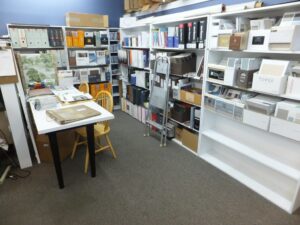 At Perspectives Inc., an organized space dedicated to wallpaper is key to bringing in sales in this category. Shelves lined with wallpaper books and rolls of wallpaper available for purchase surround a setup of tables and chairs for customer consultations in the store. Customers can also order specialty wallpaper in-store.
“Having a substantial offering of both in-stock and special order, to the point that some customers comment that ‘there is so much to choose from,’ is critical to getting and improving sales,” says Jason Taylor, president and owner of Perspectives Inc.
The vast array of wallpaper available can be overwhelming for customers choosing one or multiple options for their project. Perspectives Inc. allows customers to check out books of wallpaper samples to take home to make their decision easier.
“Checking out books allows them to see the pattern and colors in their areas so they can be more comfortable with their eventual purchase,” Taylor says.
Creative Wallpaper Displays
At Hadlock’s House of Paint, which has three locations in Rochester, New York, the winter months can be a little slow. Paint specialist and social media coordinator Todd Gonzalez says Rochester is notorious for cold, snowy winters so exterior sales are slow to nonexistent from November through March.
“Some painters and contractors have adapted and can do a small amount of exterior work inside, but it is definitely at a minimum,” Gonzalez says. “We do try to keep a small amount of exterior inventory available for their needs.”
During the winter months, Gonzalez says they focus on products retail customers want and need, including interior paint, wallpaper, window treatments, basement waterproofing products and caulking and sealants to combat winter leaks and cold weather issues.
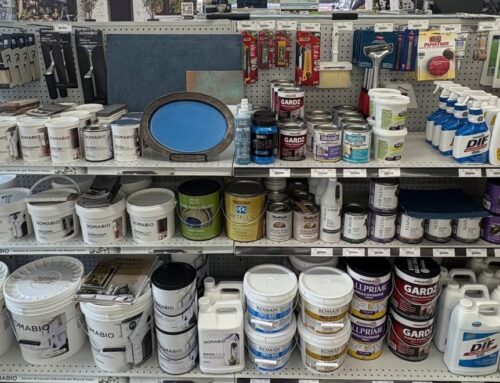
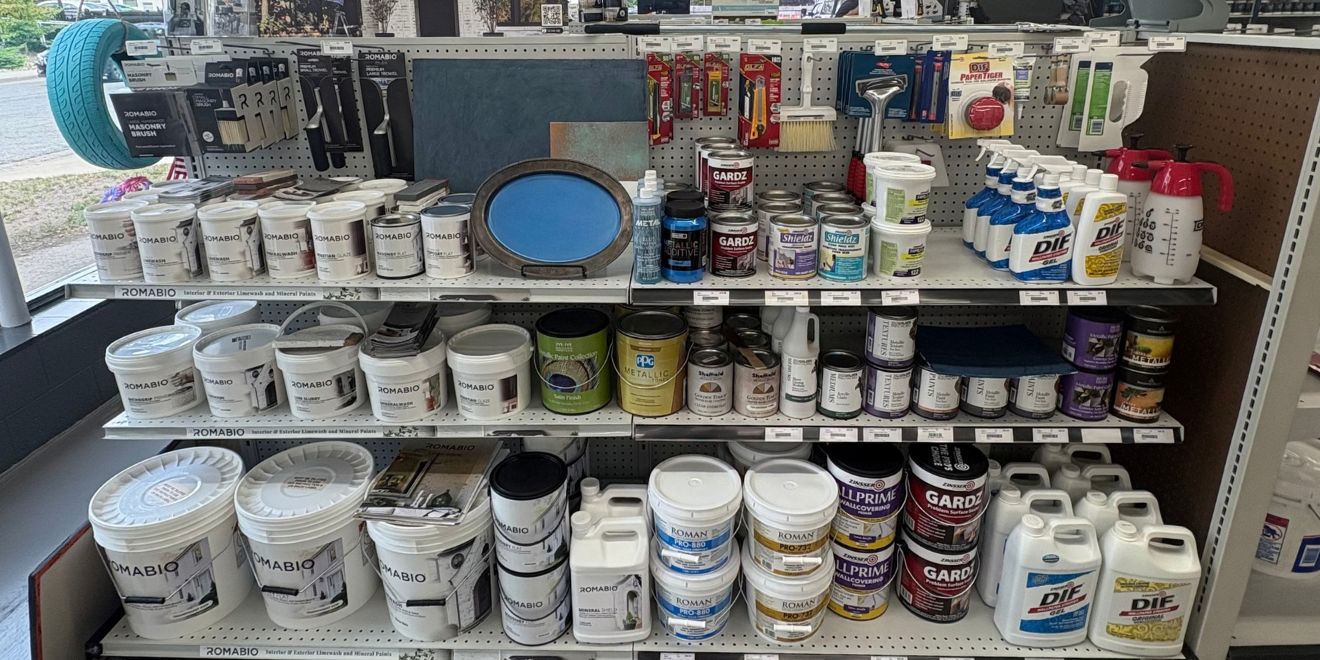
To help facilitate sales in wallpaper, the Pittsford, New York, store has rolled up large wallpaper samples in paint cans, decorating the design area. Along with providing visual interest, the wallpaper samples allow customers to see how the patterns and colors look in real life beyond the small samples in the books and photos online.
“We get the samples from several of our wallpaper vendors a couple of times a year,” Gonzalez says. “Customers appreciate being able to see the patterns up close.”
To keep inventory organized, Taylor uses a barcode system for special-order wallpaper to keep track of the store’s selection of specialty books. When a book is received, a barcode label is added to the book and logged in the store’s system.
“This system makes it simple and accurate to input the book and when checking out books in our wallpaper book management system,” he says.
Pricing Transparency and Clear Policies
Perspectives Inc.’s wallpaper business operates with a clear, tiered pricing policy, eliminating confusion for customers and employees. All in-stock wallpaper is organized and identified by assigned SKUs and pattern numbers, both for in-store and online products. The store’s special order wallpaper has its own ordering system and pricing policies. Customers pay a 50% deposit on specialty orders when purchased and pay the remaining balance at pickup. Alternatively, direct ship orders are paid in full at the time of order.
 “We add freight from a sliding scale that we update as freight charges frequently change,” Taylor says. “We also had to recently add tariff charges on some orders, which appear to be changing as well.”
The store also has a specific return policy for wallpaper, clearly stated on customer invoices, so they know what to expect when placing an order. In-stock wallpaper is returned most often, but Taylor encourages customers to order an extra roll or two if they are unsure about measurements or if the pattern has a large repeat. Special order wallpaper is not returned as often as most customers order the exact amount needed.
To return a special order, the rolls must be full double rolls as packaged by the manufacturer, while the condition of in-stock wallpaper is more flexible for returns. When Taylor ends up with multiple returned single rolls or rolls in patterns that are out of date, he bundles them and sells the bundles at a clearance price to avoid wasting product and recoup some of his cost.
“Most bundles are three or four single rolls and most are less than $10 per bundle,” Taylor says. “Bundles are clearly marked as bundles that may have mixed runs and are not returnable.”
Educate Employees to Educate Customers
Wallpaper has gone through many evolutions in recent decades, with new application types constantly emerging, like peel-and-stick.
 “We always tell customers, ‘This is not your grandmother’s wallpaper,’” Taylor says. “New substrates are becoming more prevalent, and we are seeing more use of vibrant, saturated colors, particularly when used as a focal wall with coordinating or contrasting colors used on adjoining walls.”
Taylor relies on his employees’ previous experience, hands-on training and keeping a close eye on wallpaper trends to equip staff in selling wallpaper. While many of his employees have former design experience or expertise in paint and wallpaper installation, on-the-job learning is always happening with new products that come in.
For example, wallpaper traditionally has been priced and measured by the single roll, but today, most wallpaper is only sold in double rolls. Taylor’s team has learned how to sell this new format in a way that makes sense to them and that they can easily explain to customers.
 “Explaining the different roll sizes and qualities of paper is easier with the additional information that is being put on wallpaper labels and in the books,” Taylor says. “We are seeing more books that are priced by the roll, which makes explaining the medium to a customer who is new to wallpaper a little simpler.”