

By Darrell Baker
We all know Sherwin-Williams is the behemoth of the coatings industry. Last November, it displaced Dow Chemical to take over the 30th position in the Dow Industrials Index. Let that sink in.
At 64,000 employees and $23 billion in sales, it is the largest coatings manufacturer in the world followed by PPG. Sherwin-Williams occupies space in every vertical in our industry, from raw materials production to trucking with their own fleet to owning sundry brands and of course, operating over 5,000 retail stores supported by more than 3,800 field service reps.
Let’s take a minute to explore past the headlines covering the 401(k) no-more-match news from midyear and the Cleveland colossus—the new $860 million headquarter complex in Cleveland expected to support 4,000 employees in a million square feet and opening soon after nearly four years of construction. Of course, every one of your markets is unique if you boil it down to the smallest parts of who staffs your local Sherwin-Williams store or local Lowe’s paint desk. But it’s clear that Sherwin-Williams affects all independents that sell paint.
How well do we understand Sherwin-Williams and how does that affect how an independent paint store operates?
Let’s first take a deeper dive into the numbers.
In 2016, Sherwin-Williams celebrated 150 years. They had 4,800 company-owned stores and
$11.8 billion in sales. From that dominant position, they entered an agreement to acquire Valspar. At the time, CEO John Morikis referred to the move as “the most transformational acquisition in our company’s history.” With $3 billion in added sales, this acquisition kicked off a trend of growth that has survived through today.  The company share price in 2016 was below $100 and doubled within three years of the Valspar acquisition. This year, it nearly hit $400 before settling in the mid $300s, despite the stagnation in housing churn that so many rely on for residential repaint and home improvement sales.
Since the Valspar acquisition, Sherwin-Williams has experienced steady growth across all three key divisions: Stores, Coatings and Industrial. Alongside sales and profit improvements, Sherwin-Williams continues to invest and focus on their operational proficiency. In 2023 for example, they completed 283 continuous improvement projects focused on sustainability and operational efficiencies at all manufacturing sites. They have invested heavily in digital tools in the consumer and pro segments with job estimators and color visualization tools for their end users. They even found success with their 2025 price increase strategy that kicked off in January.
In my time as a merchandiser, one of my struggles was deciding how much money I wanted to put in Sherwin-Williams’ pocket by carrying their products. Their brands like Minwax, Purdy and Thompson’s are strong and recognizable. But we stood on the principle of not supporting our competitor and eliminated as much Sherwin-Williams product as we could from our stores. We replaced Purdy with Wooster and Minwax with Old Masters, among other conversions. As far as we could tell, we never missed a beat. Many contractors even preferred buying products not associated with a giant corporation.
Staying Competitive in Your Market
On the Q3 2024 earnings call, Sherwin-Williams CEO Heidi Petz credits “distracted” competitors for an “unprecedented” market share opportunity due to competitors being “distracted or inconsistent in their execution” while Sherwin-Williams focuses on “consistency, stability and reliability.” Rather than operating distractedly, retailers need to lean on those value propositions that set them apart.
One way to avoid being distracted in your market is with your personal connection to your customers. That said, sometimes we fool ourselves into thinking that our personal relationships will keep our customers 100%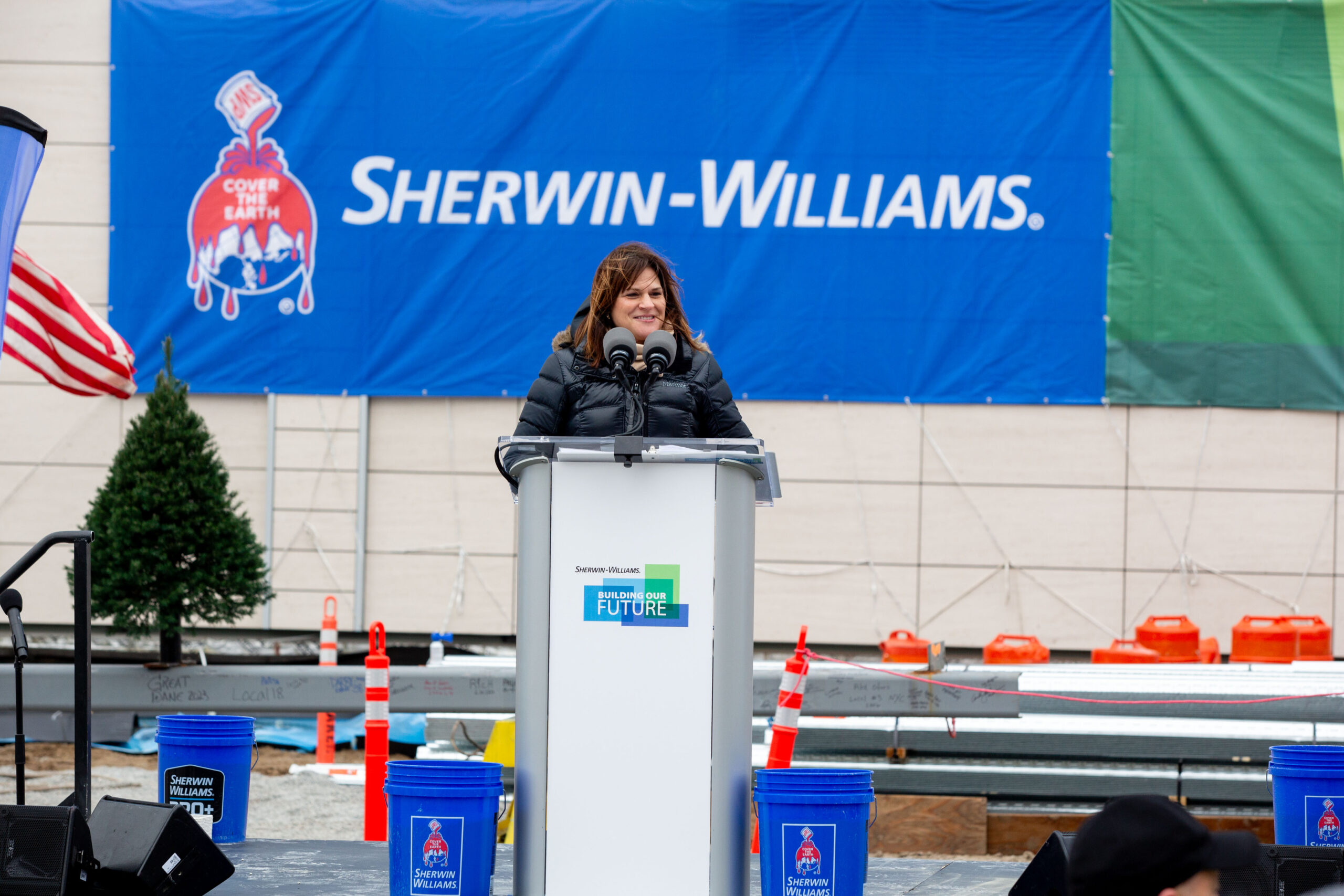 loyal. Even your best customer is probably picking up some sundries online or at the big-box store. Some may buy paint or primer elsewhere from time to time. Retailers need to evaluate their operations to verify they are providing all the convenience and service they can to their best customers.
Relationships are critical, but they must be supported by robust and sustainable strategies for strong operations. For instance, when your most knowledgeable employee can’t be at the paint counter, you need to assure that the top tier contractor will still get a great stain match.
Independent operators also need to have solid and comprehensive operational procedures that are executed reliably in order to compete most effectively. This includes everything from having your tint machines and shakers maintained on a rigorous schedule to training everyone at the paint desk in all aspects of paint selling and customer service. Independents beat the behemoth by caring more, working harder and simply doing it better. But that requires relentless attention to detail.
Several dealers across the country shared experiences from their markets in competing with Sherwin-Williams. A Chicago area dealer leverages their diversity of product offering to go up against Sherwin-Williams as they have a smaller portfolio of solutions they can sell from.
Most dealers agree that the local Sherwin-Williams store and reps usually prioritize sales of gallons and market share as the top priority. There’s a perceived disconnect in some instances where corporate may set profit goals, but local and regional sales operations may have volume goals that supersede profit incentives. This leads to things like local stores and reps setting some crazy pricing practices, right down to giving away pails of primer to your best customer just to try to win a little favor with them and disrupt your relationship. As one Minnesota seller put it, “they can just buy the business.”
Despite this perception, Sherwin-Williams has reported
12 straight quarters of year-over-year margin expansion in their Stores group through six months of this year, so they have figured out a way to maintain the low price image and still be profitable.
Independent paint retailers should be paying attention in their market to see if their customers are getting free product from Sherwin-Williams. Pro tip: walk the paint out to the contractor’s van and see for yourself if your best customers are buying elsewhere.
Product differentiation is another path, though it can be tough to communicate. When a contractor is bidding a job, a $10-$40 per gallon difference in paint can make a significant difference in how much they make on the job, even though labor typically makes up over 75% of the job cost. Even when you extol the virtues of a product you sell versus a competitor, it’s difficult to get the contractor or homeowner to really care about the quality of the finish or to understand what the quality differences might mean to them.
That’s why sales training is so important. Your staff should be able to effectively explain the value of Benjamin Moore’s Aura versus Regal or PPG’s SPEEDHIDE versus PROMINENCE. If you sell Benjamin Moore, your 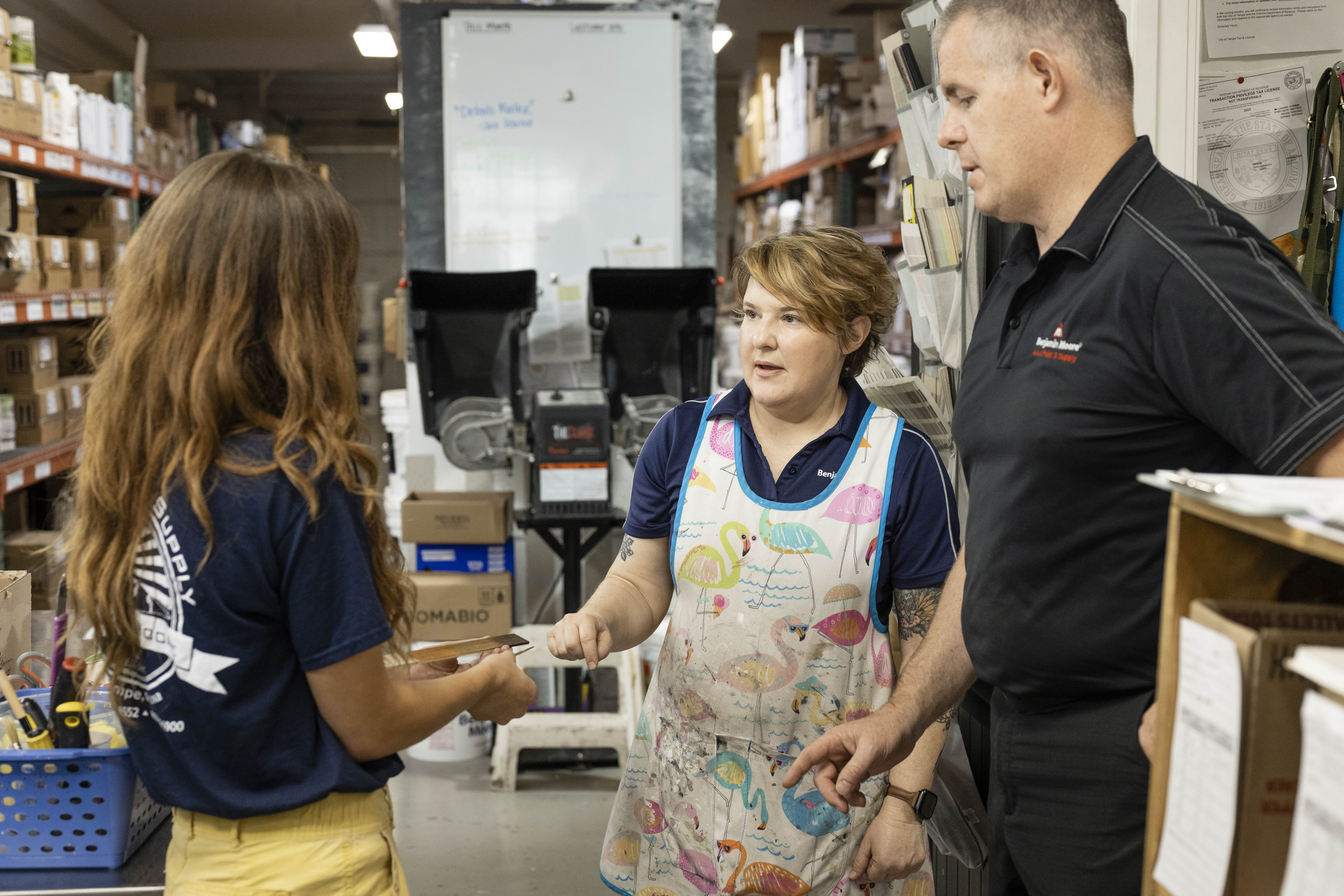 team needs to be able to explain the Gennex system and its value. Beyond architectural coatings, many independent dealers find success with more specialty coatings like epoxy and urethanes, especially if you’re NACE-certified and can work with a good manufacturer rep to provide formal bid specs. Of course, there’s always window coverings, wallpaper and flooring as additional revenue possibilities that the competition may not be tapping into.
A Rhode Island dealer with all of these product options also wins by buying big on promotion. With dedicated warehouse space, they are able to stock up on key items when sellers need to sell thus staying competitive on price and building margin.
One final differentiator is how you treat people, especially your team. Some of my best paint hires over the years came from Sherwin-Williams where they have a fantastic training program, but many had become frustrated due to lack of opportunity or didn’t care for the reality of flying solo in a paint store. Mark Lipton, an industry influencer who monitors Sherwin-Williams and the industry closely, agrees that treating your community with dignity and respect is something that resonates with customers. He’s bullish on the independent channel, particularly those that are supported by well-funded operations like Ace and Benjamin Moore among others.
Sherwin-Williams is a $23 billion dollar behemoth with over 50% U.S. market share by most estimates. Reading their quarterly earnings call transcripts is a great way to pick up relevant information on the broader market and keep up with what Sherwin-Williams is up to. You can also follow the Home Improvement Research Institute and look at other data provided by the North American Hardware and Paint Association to gain insight. Despite the headwinds, independent retail can still thrive in our respective markets by being proficient operators, focusing on the well being of our communities and building personal relationships with all that grace our doors. Know your market. Know your competition. Make them work for every penny. Our industry depends on it!
NHPA Strategic Consulting
Darrell Baker is one of NHPA’s Strategic Consulting advisers. NHPA Strategic Consulting is a new service from NHPA to connect independent retailers one on one with trusted retail experts and advisers to help you solve your most pressing business challenges.
NHPA consultants have spent their entire careers working for some of the leading independent retailers in our industry. They know how to help you grow your business because they each have specific areas of expertise within the greater framework of operating an independent home improvement retail operation. They have been in the retail trenches, and they know what works. The solutions they provide are deeply rooted in their experience and extensive track record for innovation and success. Like NHPA, they have no bias toward any one entity, and have been thoroughly vetted by your association.
Learn more at about the program by visiting YourNHPA.org/consulting.